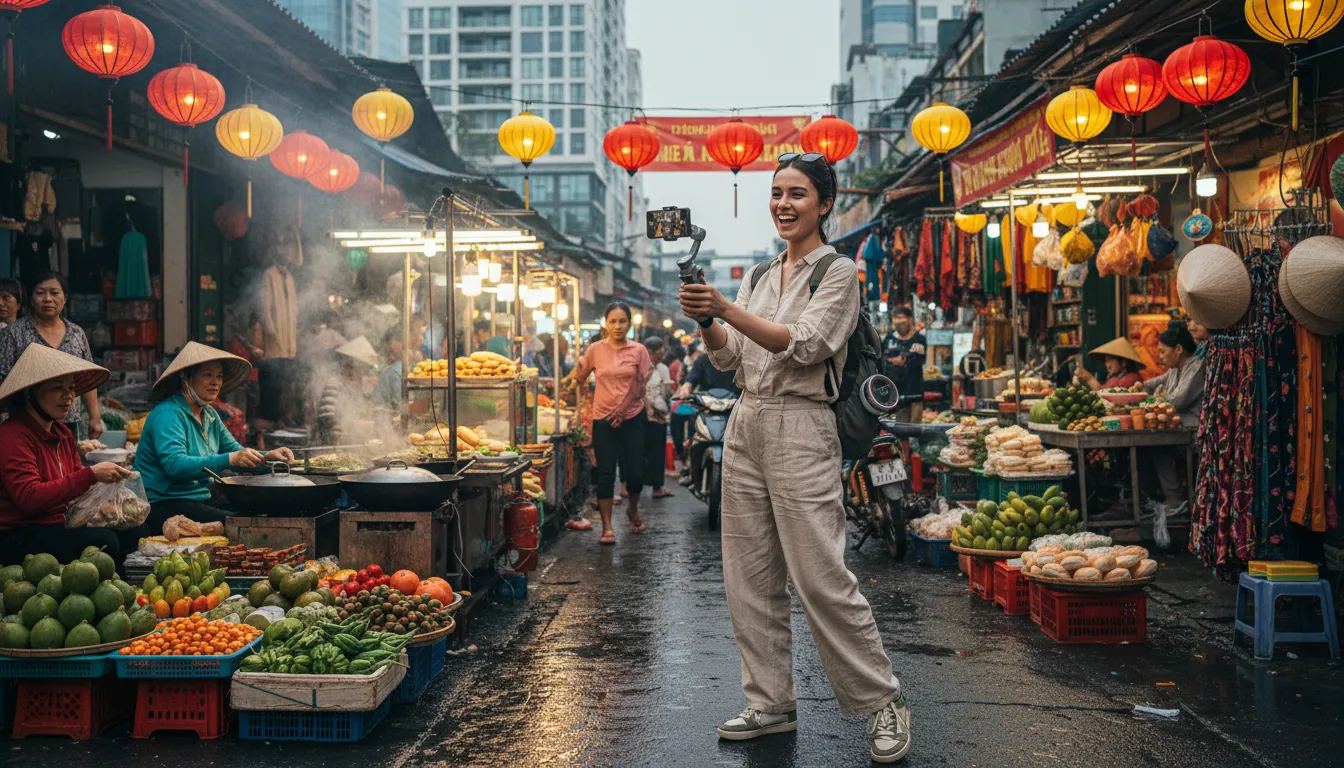
The world of storytelling is ever-evolving, and at M&M Communications, we believe in the power of capturing experiences that resonate deeply, creating lasting connections through inspirational and magical narratives. As an expert in uncovering the soul of destinations, the heart of cultures, and the stories behind every dish, I’ve witnessed firsthand how visual media transforms fleeting moments into timeless memories. From documenting the vibrant chaos of a Hanoi street market to the serene majesty of a temple in Kyoto, video is the ultimate medium for sharing these profound insights.
In 2026, the landscape of video production continues its rapid transformation, offering unprecedented opportunities for beginners to enter this dynamic field. What once required extensive budgets and specialized crews can now be achieved with remarkable quality, thanks to advancements in technology and a renewed focus on authentic storytelling. This guide is designed to demystify the journey, providing practical tips and insights for aspiring video creators to thrive in this exciting new era. It’s about more than just making videos; it’s about crafting experiences, inviting viewers to feel, and ultimately, to wonder.
Getting Started in the Age of AI
The year 2026 marks a pivotal moment where artificial intelligence has become not just a tool, but a creative partner in video production. For beginners, this means a significantly lower barrier to entry, allowing you to focus more on narrative and less on technical hurdles. My own journey, often solo in remote corners of the world, has taught me the value of efficiency and ingenuity, qualities AI now amplifies for everyone.
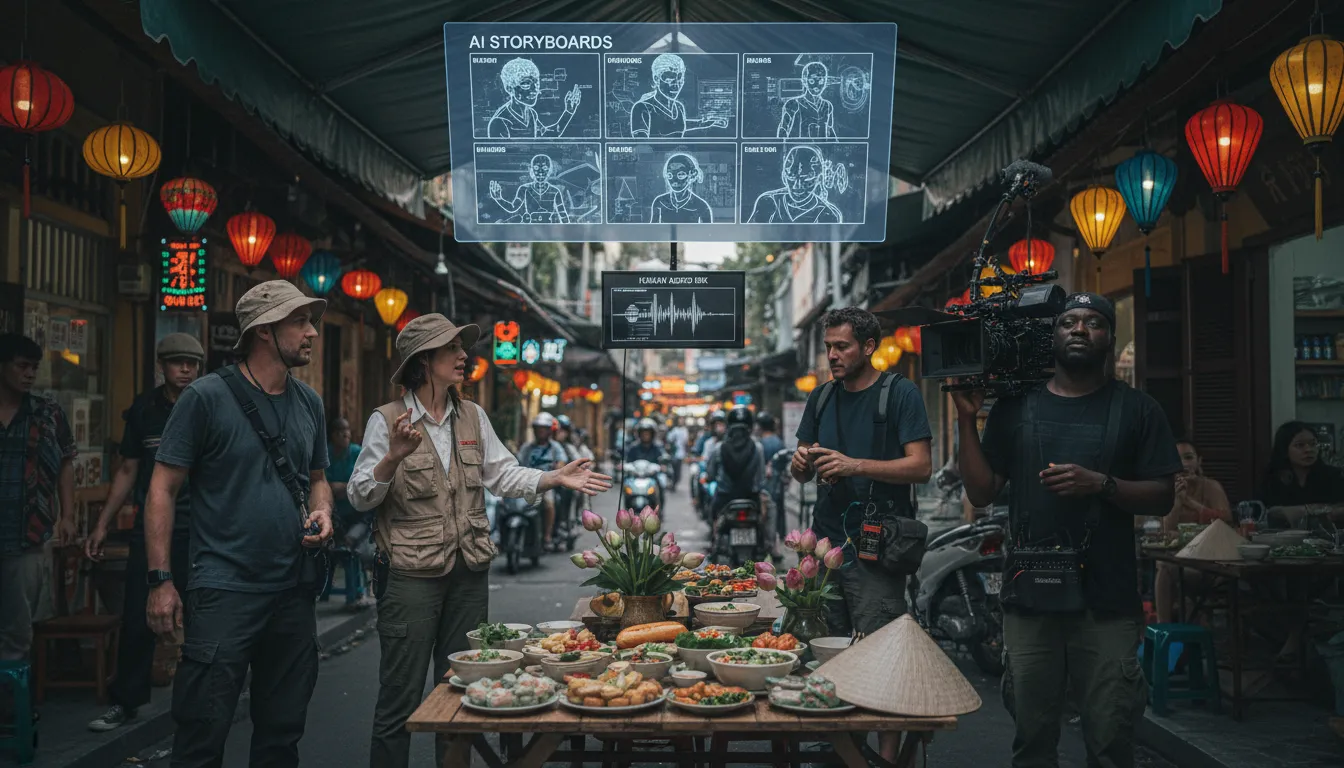
AI-powered software can assist with everything from scriptwriting and storyboarding to advanced editing and sound design. Imagine generating realistic b-roll footage of a bustling ancient city or animating historical figures to complement your documentary on cultural heritage, all with simple text prompts. This integration simplifies complex tasks, freeing up valuable time and resources. It allows even a single creator to produce content that rivals larger productions, making your vision accessible and achievable.
The key is to embrace AI as an enhancement to your creativity, not a replacement for it. Think of it as having a highly skilled, tireless assistant who can handle repetitive or technically demanding tasks. This allows you, the storyteller, to concentrate on the unique perspective and emotional depth that only a human can bring to a narrative. It's about leveraging technology to make your magical stories even more impactful and widely shareable.
Just as I might use a digital camera to capture the intricate details of a Balinese offering, AI helps refine and present that capture with greater polish. This era empowers creators to experiment, innovate, and bring their unique perspectives to life without being bogged down by steep learning curves. The focus shifts from mastering every technical knob and dial to mastering the art of compelling communication.
Minimum Viable Gear for 2026 Beginners
Gone are the days when a beginner needed a truckload of expensive equipment to produce high-quality video. In 2026, the emphasis is on smart, versatile tools that deliver professional results without breaking the bank. My personal expeditions, often with a minimalist setup, have proven that the right gear, wielded with intention, can capture extraordinary stories.
Your smartphone, for instance, remains an incredibly powerful and accessible tool. Modern flagship smartphones boast cinematic video capabilities, advanced stabilization, and high-resolution recording that can rival entry-level professional cameras. Paired with external lenses or simple accessories, a smartphone can be your primary camera for many projects.
Beyond your phone, consider a compact mirrorless camera as a significant upgrade for enhanced image quality and creative control. Models from Sony, Fujifilm, or Canon offer excellent video features in portable bodies, ideal for travel and diverse shooting scenarios. These cameras provide interchangeable lenses, allowing for greater flexibility in capturing everything from wide-angle landscapes to intimate food close-ups.
Sound quality is paramount, often more so than image quality, in conveying professionalism and drawing viewers into your story. Invest in a good external microphone, such as a lavalier mic for interviews or a shotgun mic for ambient sounds, to capture crisp, clear audio. A reliable tripod or gimbal is also essential for stable, smooth footage, elevating your production value instantly.
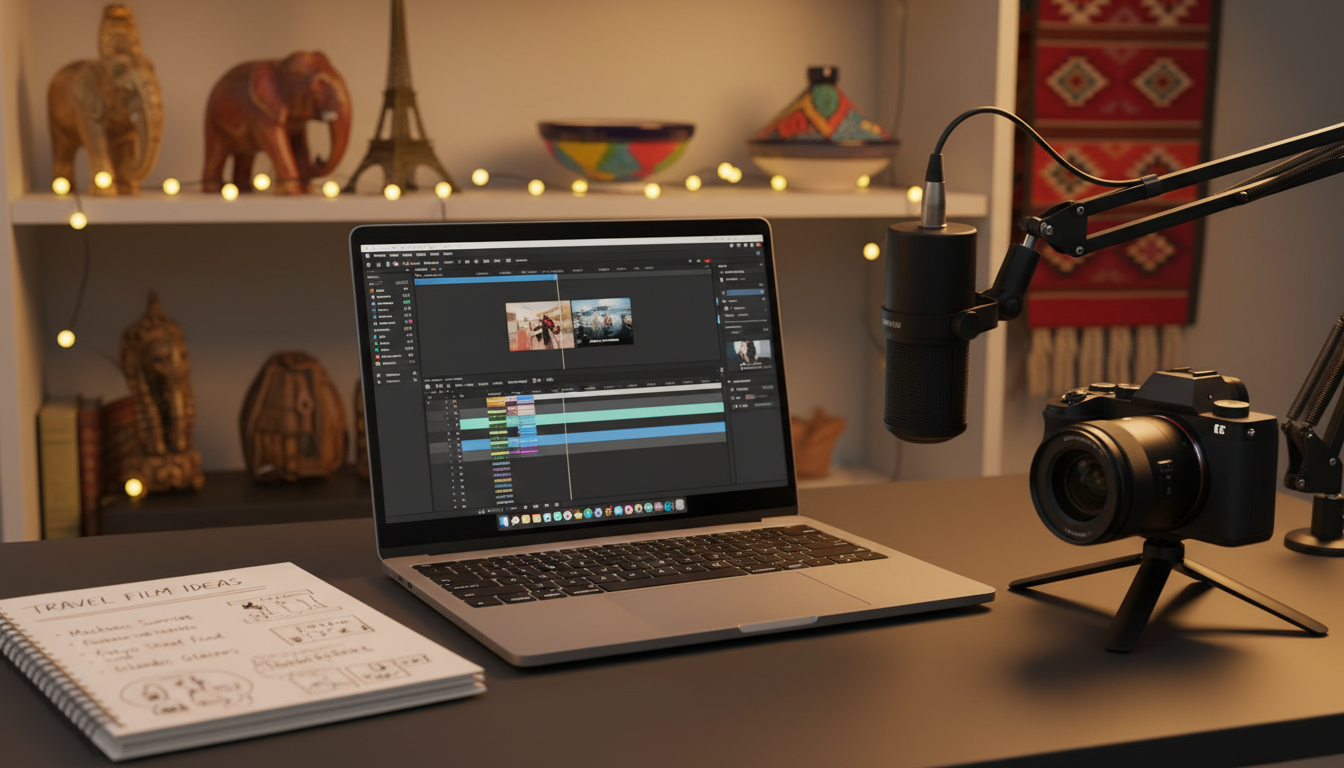
Finally, a powerful laptop or tablet for editing is crucial, ideally one capable of handling modern video editing software. While cloud-based solutions are gaining traction, having a local machine for rendering and detailed work remains valuable. This streamlined kit allows you to be agile, capturing spontaneous moments and delivering compelling visual narratives from anywhere in the world.

Understanding Cloud-Based Collaboration
The global nature of M&M Communications’ work, bridging various cultures and ideas, perfectly illustrates the necessity of seamless collaboration. In 2026, cloud-based platforms have revolutionized how video teams, even those of one or two, work together across geographical boundaries. This paradigm shift enables unprecedented flexibility and efficiency, a stark contrast to the days of shipping hard drives across continents.
Cloud collaboration allows multiple team members to access, edit, and review video projects simultaneously from anywhere in the world. Imagine a scenario where I'm shooting a documentary on ancient craft traditions in rural Vietnam, while an editor in Ho Chi Minh City begins organizing footage as soon as it's uploaded. This real-time workflow significantly accelerates production timelines and streamlines communication.
Platforms like Frame.io, DaVinci Resolve Cloud, or Adobe Creative Cloud offer robust features for version control, commenting, and asset management. They ensure that everyone is working on the most current version of a project, minimizing errors and misunderstandings. This is particularly beneficial for beginners who might be collaborating with remote freelancers for editing, motion graphics, or sound design.
Beyond shared project files, cloud services also facilitate efficient feedback loops. Reviewers can leave time-stamped comments directly on the video timeline, making revisions clear and actionable. This eliminates the endless email chains and confusing marked-up documents, ensuring that every voice is heard and every creative decision is well-informed. It embodies M&M’s commitment to ensuring your voice is heard and your needs are met.
For those starting out, embracing cloud collaboration means you're no longer limited by your physical location or the size of your immediate network. You can tap into a global talent pool, finding the best editors, graphic designers, or sound engineers regardless of where they are. This democratic approach to production empowers beginners to scale their projects and achieve a level of professionalism previously reserved for large studios.
Basic Prompt Engineering for Video Creators
As AI becomes an indispensable co-creator, understanding prompt engineering is no longer a niche skill but a fundamental requirement for video creators in 2026. Think of it as learning the language to speak directly to your AI assistant, guiding it to manifest your creative vision with precision. My experience in describing intricate cultural nuances or the sensory explosion of a specific cuisine translates directly to crafting effective prompts.
Prompt engineering involves crafting clear, specific, and detailed instructions for AI models to generate desired video content, edits, or effects. It's about articulating your aesthetic, thematic, and technical requirements in a way that AI can interpret accurately. For instance, instead of "make a video of a city," you'd prompt: "Generate a 15-second hyperlapse video showing the transition from dawn to bustling midday in a futuristic, neon-lit Tokyo street, with subtle rain effects and reflections."
The better you articulate your vision, the more accurately the AI will deliver. This includes specifying visual styles (e.g., cinematic, documentary, vibrant, muted), emotional tones (e.g., nostalgic, energetic, mysterious), and specific elements to include or exclude. Experimentation is key; you'll learn what types of language and detail yield the best results from different AI models.
Prompt engineering extends beyond generating entirely new footage. You can use it to refine existing clips, such as "enhance the golden hour glow on this footage of a vineyard in Tuscany" or "add a subtle, flowing watercolor animation transition between these two scenes of traditional Vietnamese pottery making." AI can help with color grading, object removal, background generation, and even complex visual effects.
For beginners, mastering prompt engineering means unlocking a vast array of creative possibilities without needing years of experience in visual effects or animation software. It empowers you to bring complex ideas to life, transforming your imaginative concepts into tangible video assets with remarkable ease. This skill truly allows you to "never stop making you wonder at all things we do."

Building Your First 2026 Video Strategy
Every successful project, from a documentary exploring the hidden history of a forgotten empire to a series on sustainable farming practices, begins with a well-defined strategy. For beginners in 2026, a robust video strategy is your roadmap to creating impactful content that resonates with your audience and achieves your objectives. It's about being intentional, much like planning a journey to discover a new culture.
Start by clearly defining your purpose and target audience. Are you creating educational content, personal vlogs, promotional videos for a local business, or perhaps short documentaries about local culinary traditions? Understanding who you're speaking to and why you're speaking to them will inform every subsequent decision. M&M’s emphasis on understanding clients and their customers is paramount here.
Next, identify your niche and unique selling proposition. In a crowded digital landscape, what makes your voice or perspective stand out? Perhaps it’s your ability to tell stories of lesser-known travel destinations, your expertise in ancient cooking techniques, or your authentic insights into a specific subculture. Your unique perspective is your most valuable asset.
Consider the platforms where your audience spends their time. Will your content be primarily for YouTube, TikTok, Instagram Reels, or a more niche platform? Each platform has its own best practices, ideal video lengths, and content styles. Tailoring your content for specific platforms will maximize its reach and engagement.
Develop a consistent content calendar and theme. Regularity builds an audience, and a consistent theme helps establish your brand identity. Even as a beginner, planning your content ahead allows for better resource allocation and creative development. This structured approach, while flexible, ensures you're always moving forward with purpose.
Finally, establish clear metrics for success. Are you aiming for a certain number of views, engagement rate, subscriber growth, or perhaps conversions for a client? Defining success early helps you evaluate your efforts and refine your strategy over time. It’s about more than just making videos; it’s about making videos that work for your goals.
Essential Resources and Learning Paths
The beauty of 2026 for video beginners lies in the abundance of accessible learning resources. The journey of mastering video production is ongoing, much like continually deepening one's understanding of global cultures. There are countless avenues to acquire new skills and stay abreast of evolving technologies.
Online tutorials and courses are an invaluable starting point. Platforms like YouTube, Skillshare, Coursera, and Udemy offer comprehensive lessons on everything from camera fundamentals and lighting techniques to advanced editing and AI integration. Many of these resources are free or available at a minimal cost, democratizing access to education.
Actively engage with online communities and forums dedicated to video production. These platforms provide opportunities to ask questions, share your work, receive feedback, and learn from experienced professionals. Being part of a community fosters growth and keeps you motivated, much like joining a local cultural exchange group.
Experimentation is perhaps the most powerful teacher. Don't be afraid to try new techniques, software, or AI tools. The best way to learn is by doing, by iterating, and by pushing the boundaries of your comfort zone. Each project, big or small, offers unique learning opportunities.
Stay curious about emerging technologies, especially in the realm of AI. Follow industry news, subscribe to relevant newsletters, and attend virtual workshops. The landscape of video production is constantly shifting, and continuous learning is essential to remain competitive and innovative. This aligns perfectly with M&M's commitment to "never stop making you wonder."
Remember that M&M Communications itself offers integrated services, from strategic planning to asset production. While this guide is for beginners, understanding the full spectrum of services from agencies like M&M can provide context for future growth and collaboration. Knowing where professional support is available can simplify your life and optimize your budget as you scale your ambitions.
Conclusion: Your Story, Amplified
The state of video production in 2026 presents an incredibly exciting era for beginners. With AI as a powerful ally, cloud-based collaboration simplifying teamwork, and accessible gear democratizing quality, the barriers to entry have never been lower. This is a time where your unique perspective and authentic stories can truly shine, reaching audiences across the globe.
At M&M Communications, our mission is to emphasize experiences through inspirational and magical storytelling, creating lasting connections that go beyond mere transactions. As you embark on your video production journey, remember that the most compelling content is born from genuine feeling and a desire to share something meaningful. Whether you're documenting the rich tapestry of a culture, the nuanced flavors of a regional cuisine, or the untold history of a landmark, your video has the power to transport and transform.
Embrace the tools available, cultivate your storytelling craft, and never stop exploring the endless possibilities that video offers. The world is waiting for your unique narrative, and with the right approach, you can create content that not only engages but truly makes people wonder. Step into 2026 with confidence, curiosity, and a commitment to telling stories that resonate deeply and create lasting connections.