The world of storytelling is always evolving, much like a vibrant marketplace where new spices and textiles constantly appear, each promising a richer experience. In 2026, the realm of video production is undergoing a profound transformation, driven by the relentless march of Artificial Intelligence and cutting-edge technology. This isn't just about faster workflows or more efficient production schedules; it's about unlocking unprecedented creative freedom and forging deeper, more authentic emotional connections with audiences across the globe.
At M&M Communications, we understand that technology is merely a sophisticated brush; the true art lies in the inspirational and magical stories it helps us paint. These are narratives that resonate deeply, emphasizing the experiences of those who engage with them, and ultimately fostering lasting connections that go beyond mere transactions. We are here to explore the "State of Video Production in 2026 explained" through the lens of innovation, human connection, and the boundless possibilities it offers for captivating storytelling.
This journey into the future of video production reveals a landscape where boundaries blur, and imagination finds new canvases. From hyper-realistic virtual environments to seamlessly integrated remote teams, the industry is poised for an era of wonder. We are witnessing "State of Video Production in 2026 industry trends" that redefine what is possible, bringing dreams to vivid, tangible life.

What is Neural Rendering? The Art of Hyper-Real Worlds
For years, content creators, myself included, have strived to transport audiences to distant lands, historical epochs, or even fantastical realms. We’ve meticulously crafted sets, scouted breathtaking locations, and painstakingly rendered CGI scenes, all in pursuit of that elusive sense of immersion. In 2026, a revolutionary technology known as neural rendering is fundamentally changing how we build these worlds, making them more real and more accessible than ever before.
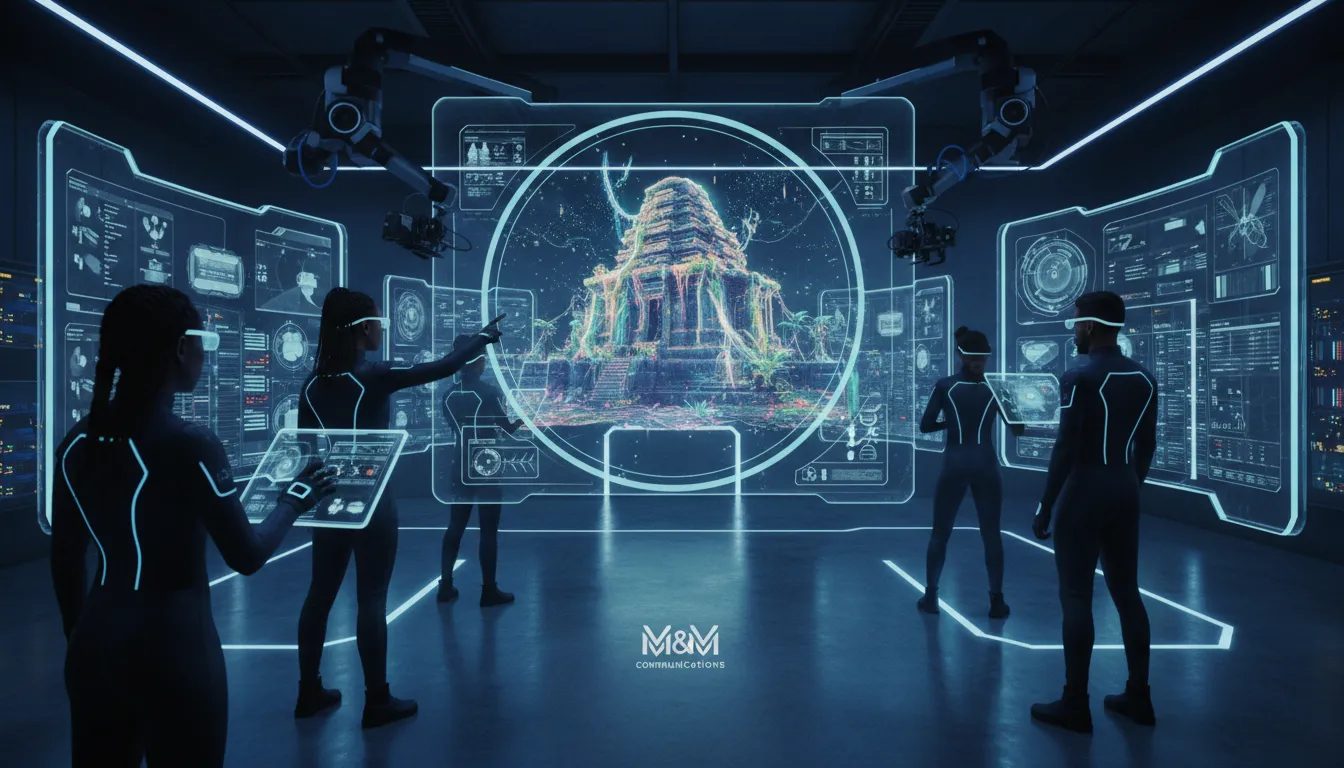
Neural rendering involves using sophisticated AI models to generate photorealistic images or entire scenes from various forms of input data, rather than relying solely on traditional 3D modeling and texturing. Unlike conventional computer graphics, which build scenes polygon by polygon, neural rendering approaches, such as Neural Radiance Fields (NeRFs), learn to represent a scene's light field directly from a collection of 2D images. This allows them to synthesize new views of the scene with astonishing fidelity and intricate detail.
Imagine walking through the bustling markets of 15th-century Hội An, feeling the warmth of the sun on your skin, hearing the distant chatter, and smelling the fragrant spices. For a historical documentary or an immersive cultural experience, neural rendering can recreate such an environment with breathtaking realism, capturing the subtle interplay of light and shadow, the unique textures of ancient wood, and the patina of aged stone. My own journeys through Vietnam's heritage sites have often left me yearning for a way to truly convey their timeless beauty and the stories etched into their very fabric; neural rendering offers precisely that power. It allows us to not just show a place, but to make the audience feel its essence.
This technology doesn't just replicate; it can extrapolate and fill in gaps, creating complete, consistent 3D environments from surprisingly sparse photographic data. The AI understands how light behaves, how materials reflect and refract, and how complex scenes should appear from any angle, resulting in visuals that are virtually indistinguishable from reality. For a food travel series, this means recreating a specific, long-lost street stall in Bangkok with perfect authenticity, allowing viewers to vicariously experience a culinary moment frozen in time.
The implications for storytelling are profound. Production teams can now build entire cinematic universes or reconstruct historical events with an unprecedented level of visual accuracy and flexibility. It means that the constraints of physical sets, location permits, or even historical accuracy in terms of available artifacts are dramatically lessened. We can explore ancient ruins that no longer exist, or journey through vibrant cultural festivals from decades past, all rendered with such precision that the audience's disbelief is effortlessly suspended.
At M&M Communications, neural rendering allows us to craft "magical stories" by building worlds that feel utterly tangible and deeply immersive, transcending the boundaries of traditional sets and budget limitations. This innovation enables us to emphasize audience experiences, making them truly feel present within the narrative, whether it's exploring the intricate details of a luxury hotel interior for Lotte Hotel Saigon or showcasing the unique landscape of Ly Son Island for a tourism campaign. It’s about creating an emotional connection that sticks, long after the screen fades to black.
The Death of Traditional Green Screen: Seamless Realities
For decades, the green screen has been an indispensable tool in video production, a canvas upon which filmmakers could paint any background imaginable. Yet, as a seasoned observer of visual storytelling, I've often felt its limitations: the tell-tale green spill around hair, the awkward reflections, the subtle halos, and the perpetual challenge of achieving perfect lighting consistency between foreground and background. These imperfections, however minor, can break the immersive spell, much like a discordant note in a beautiful melody. In 2026, the traditional green screen, with its inherent compromises, is largely becoming a relic of the past, replaced by more sophisticated and seamless technologies.
The advent of neural rendering, combined with advanced volumetric capture, has rendered the green screen obsolete for many high-end productions. Instead of isolating a subject against a flat green backdrop, volumetric capture creates a full 3D representation of an actor or object. This 3D data can then be seamlessly "placed" into any neural-rendered environment, matching lighting, shadows, and perspective with absolute precision. The subject becomes an integral part of the virtual scene, not merely an overlay.
Imagine a chef demonstrating a signature dish for a client like Quan Bui Restaurant, not in a sterile studio, but within a bustling, atmospheric Vietnamese market, complete with steam rising from a vendor's pho and the glow of lanterns. With volumetric capture and neural rendering, this scene can be created with every texture, shadow, and environmental interaction perfectly aligned, even if the chef is thousands of miles away from the actual market. The resulting visuals eliminate the "uncanny valley" effect that often plagues traditional green screen composites, offering a level of realism that is truly breathtaking.
This technological leap means that directors and cinematographers no longer have to compromise on lighting or camera movement. They can achieve dynamic shots that seamlessly integrate talent with virtual backdrops, allowing for greater creative freedom and more natural performances. The laborious post-production process of rotoscoping and keying out green spill is dramatically reduced, freeing up valuable time and resources. For a brand like Shiseido, producing a beauty campaign, this means their models can appear flawless within any imagined, exquisite setting, without the artificiality of a forced composite.
My experience witnessing the evolution of travel documentaries highlights this shift. I've seen countless historical dramas where a poorly executed green screen background instantly pulls me out of the narrative, reminding me that I'm watching a production, not experiencing a moment. The subtle falseness can be as jarring as an anachronistic detail. With these new technologies, the illusion is complete. We can now genuinely bring a lost Roman market to life, not just visually, but with an immersive sense of presence that captivates and holds the audience's attention.
For M&M Communications, this shift means we can achieve unparalleled visual fidelity in our "creative performance content" and "commercial video" productions. It removes technical barriers that once constrained imagination, allowing our storytellers to focus purely on the narrative and emotional impact. By eliminating the artificiality of traditional compositing, we can create seamless, integrated experiences that resonate deeply with audiences, fostering those lasting connections that are at the heart of our mission. It allows us to deliver on our promise of creating truly "inspirational and magical stories" without compromise.

How Generative AI Replaced Stock Footage: Tailored Visual Narratives
The quest for the perfect visual asset has long been a familiar, often frustrating, journey for content creators. Traditional stock footage libraries, while vast, often present a paradox: an abundance of choice leading to a dearth of true uniqueness. We've all seen the same generic shots of smiling business people, bustling cityscapes, or picturesque landscapes repeated across countless advertisements and corporate videos. This repetition diminishes a brand's distinctiveness and struggles to evoke the genuine emotional resonance M&M Communications strives for. In 2026, Generative AI has largely replaced the need for generic stock footage, ushering in an era of hyper-customized visual narratives.
Generative AI models, powered by vast datasets and advanced algorithms, can now produce unique, high-quality video clips, images, and even entire short scenes based on simple text prompts or existing visual references. This means that instead of sifting through hundreds of clips trying to find something "close enough," creators can simply describe the exact shot they envision, and the AI will conjure it into existence. Need a specific angle of a bustling street food stall in Bangkok at dusk, with a unique architectural detail from a specific historical period? AI can generate it. Require a sequence showcasing diverse faces enjoying a specific dish, with expressions nuanced to match the story's emotional beat? AI delivers.
This capability is a game-changer for "customized concept" and "product concept/product feature" productions. No longer are brands constrained by what's available off-the-shelf. Vinchoco, for example, can now have perfectly tailored visual content that shows their chocolate being enjoyed in a unique, aesthetically specific setting that perfectly aligns with their brand identity, rather than a generic cafe shot. This ensures that every visual element reinforces the brand's unique story and values, preventing the dilution that comes from shared, unoriginal imagery.
My own experiences as a writer and producer often involved endless hours sifting through stock libraries, trying to find that perfect shot that truly captured the essence of a culture or a culinary tradition. More often than not, I would settle for "good enough," knowing it wouldn't quite hit the mark emotionally. Now, "good enough" is a relic of the past. Generative AI allows for an unprecedented level of creative control, enabling the production of visuals that are not only high-quality but also deeply specific and emotionally resonant. This is particularly vital for projects like "documentary" work or "business introduction" videos, where authenticity and precision are paramount.
Beyond basic shots, advanced AI systems can generate variations, adjust lighting and mood, and even animate still images into dynamic video sequences. This provides an almost limitless palette for creative ideation, allowing M&M to explore diverse visual styles and narratives without the prohibitive costs and time associated with traditional custom shoots. For clients like The Body Shop or Colgate & Palmolive, this means campaigns can feature highly specific scenarios that resonate with their target demographics, showcasing product use in perfectly tailored, diverse, and authentic contexts.
This paradigm shift directly supports M&M Communications' commitment to "optimize your affordable budget while delivering good values." By dramatically reducing the reliance on costly custom shoots or generic stock licenses, Generative AI enables us to create unique visual assets that perfectly align with our clients' brands and stories. It empowers us to avoid common pitfalls and instead craft "inspirational and magical stories" that are truly one-of-a-kind, setting our clients apart from the competition and creating lasting connections through feeling.
The Role of 6G Connectivity in Remote Production: A Global Stage
The world is shrinking, not geographically, but in terms of how quickly we can connect and collaborate across vast distances. For those of us who have spent years documenting cultures and cuisines in far-flung locales, the challenges of remote production—from patchy internet to delayed feedback—are intimately familiar. In 2026, 6G connectivity is transforming these logistical nightmares into seamless opportunities, creating a truly global stage for video production. This ultra-fast, ultra-reliable wireless technology is not just an incremental upgrade; it’s a foundational shift that redefines what’s possible in remote workflows.
6G connectivity promises unprecedented levels of ultra-low latency, massive bandwidth, and enhanced reliability, far surpassing its 5G predecessor. It integrates seamlessly with AI and the Internet of Things (IoT), creating an intelligent network fabric that can handle immense data loads with virtually no delay. For video production, this translates into real-time collaboration from anywhere on the planet, seamless transfer of high-fidelity assets, precise remote camera control, and instant feedback loops that make distance irrelevant.
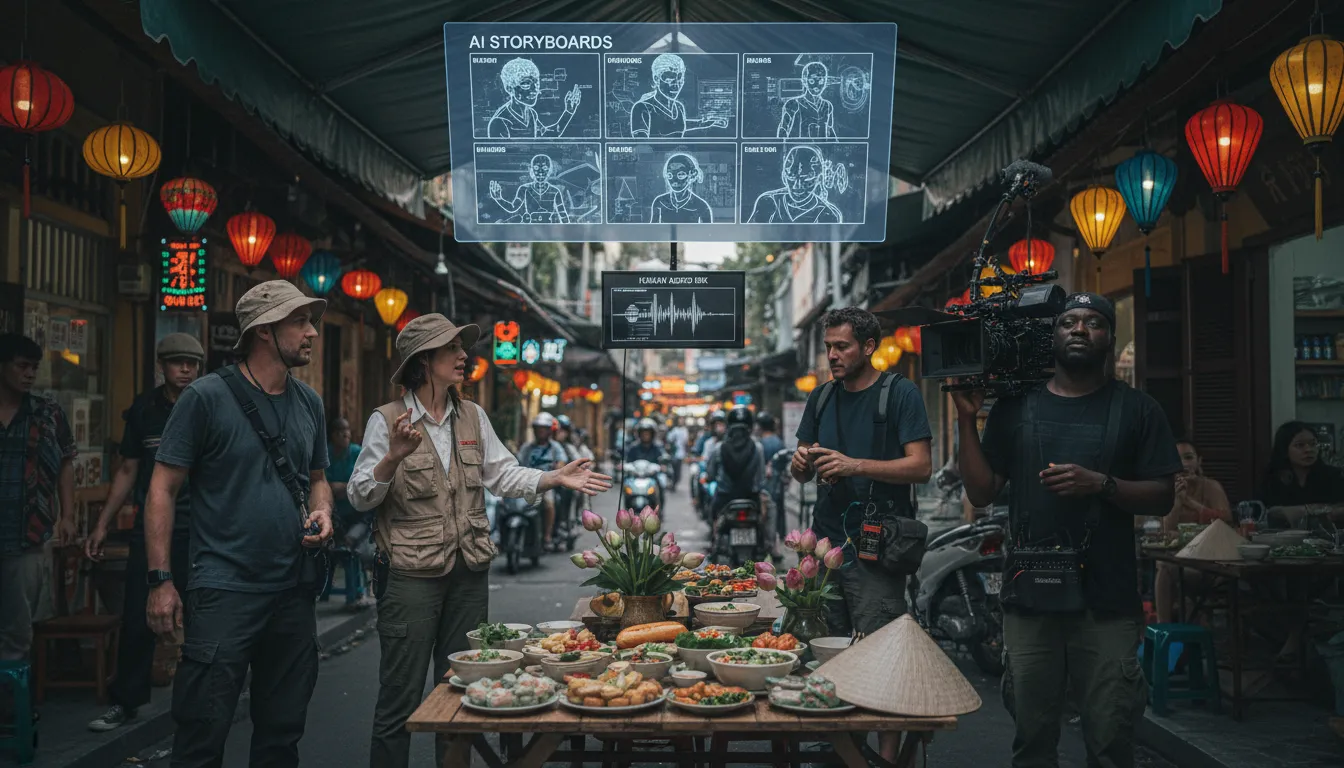
Imagine directing a documentary shoot for The National Program One Commune One Product (OCOP) in a remote, picturesque village in Vietnam's highlands, all from a studio in Ho Chi Minh City. With 6G, you could see the live camera feed in crystal-clear 8K, control camera angles and focus with millisecond precision, and communicate with the on-site crew as if you were standing right beside them. The logistical complexities of transferring massive video files or coordinating complex lighting setups across time zones become a thing of the past. My own experiences trying to upload hours of raw footage from a remote island like Ly Son, or a bustling fishing village, often involved agonizing waits and compromised quality. 6G obliterates these frustrations.
This level of connectivity fundamentally changes how M&M Communications approaches "video shooting & photo shooting," especially for "documentary," "event / recap & highlight," and "architecture/interior collection" productions. It simplifies life with integrated services, allowing for a truly global reach and collaboration while maintaining uncompromised quality and efficiency. Brands like Lotte Hotel Saigon, for instance, can capture stunning footage of their "Ottimo House Trattoria" or "The Canvas" restaurant, directed by a remote team that ensures every detail aligns with their luxurious brand image, without the need for extensive travel and its associated costs.
The enhanced reliability of 6G means fewer dropped connections and more consistent data streams, crucial for live broadcasts or time-sensitive event coverage. This allows for innovative approaches to "viral video" or "music video" production, where real-time coordination across multiple, geographically dispersed locations can add a dynamic, global feel. It optimizes budgets by significantly reducing travel costs, accommodation expenses, and the logistical complexities associated with traditional on-location shoots. This ensures M&M can deliver exceptional value while offering clients a comfortable and streamlined working relationship.
Real-time Multi-User VR Directing: Stepping into the Scene
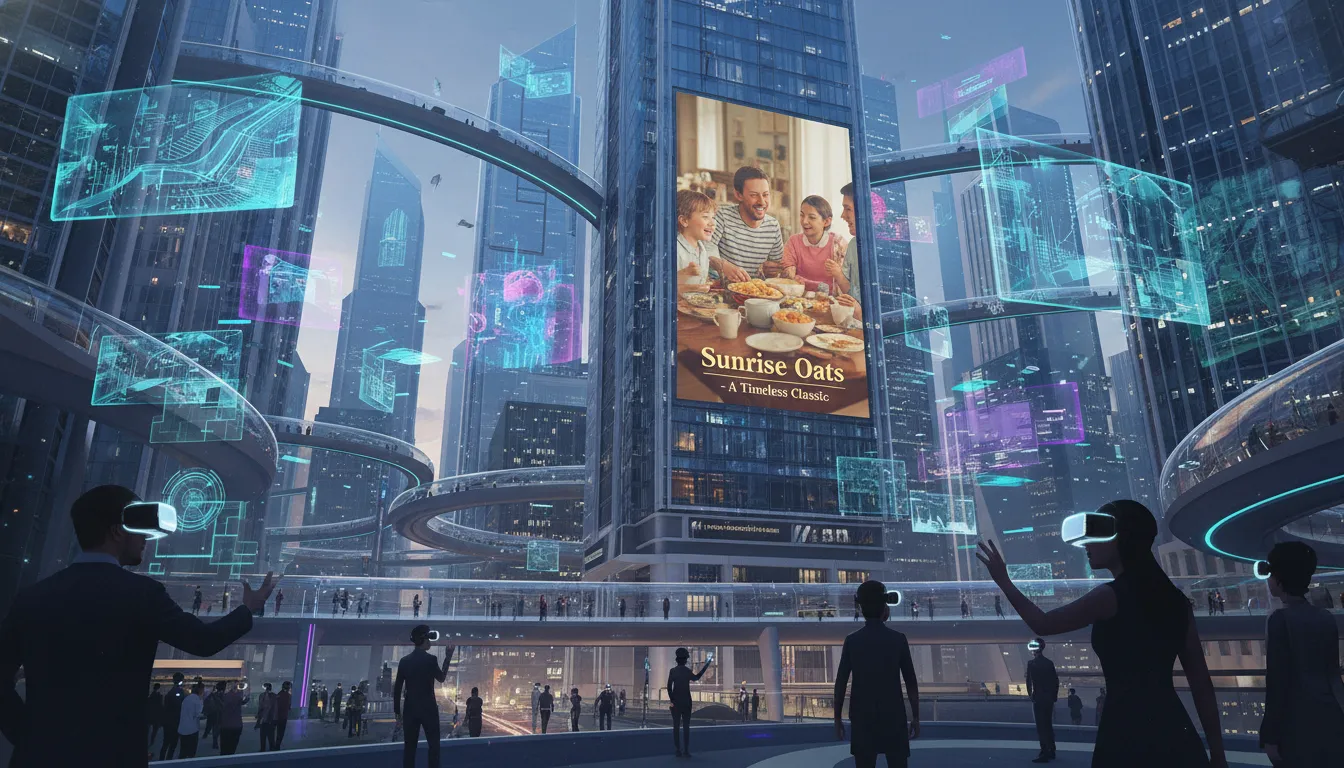
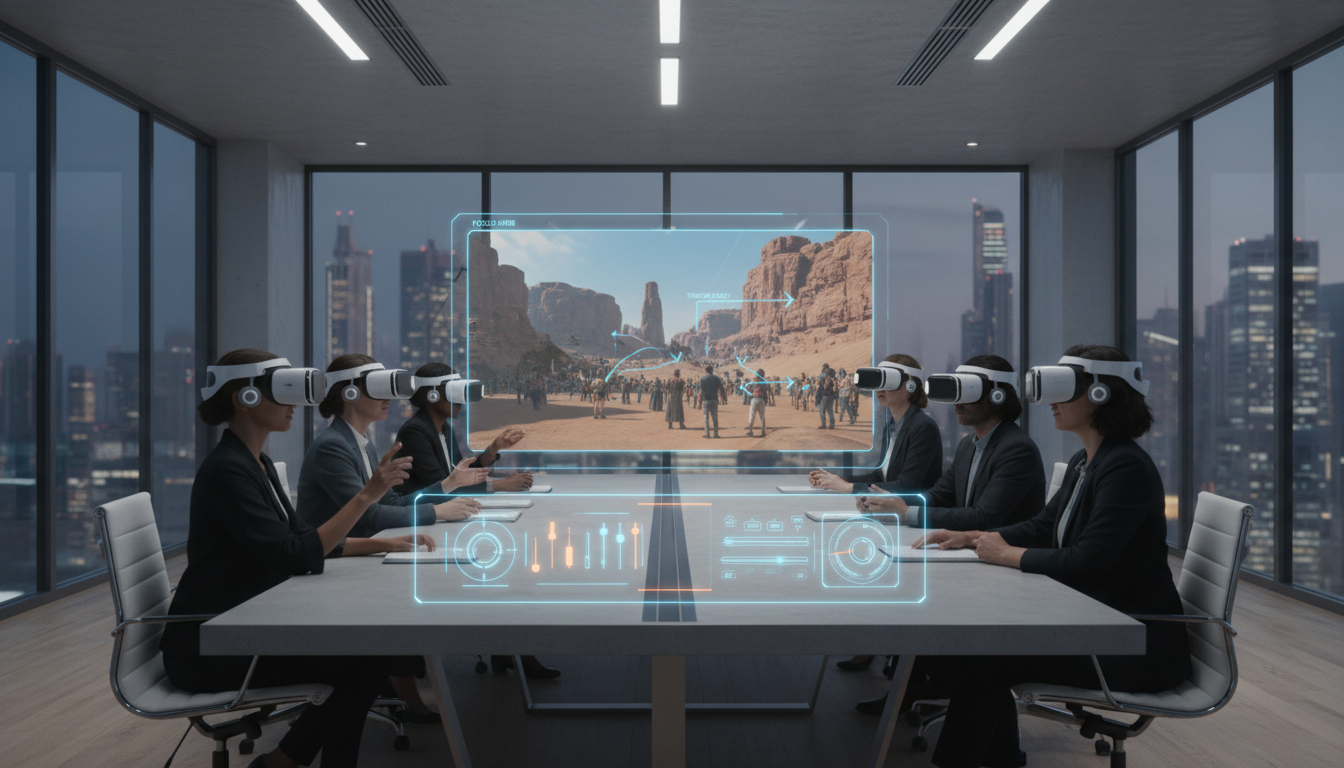
Building upon the robust foundation of 6G, a truly revolutionary application for remote production in 2026 is real-time multi-user VR directing. This technology allows directors, cinematographers, creative directors, and even clients to enter a shared virtual space, viewing a live feed of the remote shoot as if they were physically present on set. It’s an immersive experience that transcends conventional video conferencing, offering unparalleled collaboration and creative control.
Within this shared VR environment, participants can "walk around" the virtual set, seeing the scene unfold from any angle, just as a director would on a physical set. They can interact with virtual representations of the actors, make real-time adjustments to camera positions, lighting, and even virtual set elements, all while communicating seamlessly with the on-site crew. Imagine a client for Meat & Livestock Australia (Aussie Beef and Lamb Vietnam) being able to virtually step into a remote farm in Australia, overseeing a shoot for an agricultural documentary, ensuring that every frame captures the authentic story of their produce.
The benefits of this approach are immense. It enhances communication, providing immediate visual feedback that eliminates misinterpretations and reduces costly errors. Directors can virtually "scout" locations before physical travel, optimizing planning and ensuring the chosen environment perfectly matches the creative vision. This level of immersive collaboration fosters a stronger sense of team cohesion, allowing diverse perspectives to contribute regardless of their physical location. I recall the frustrations of trying to explain a specific visual nuance – the way light hits a street vendor's cart, or a particular angle on a temple ruin – to a remote camera operator over a patchy call. With real-time VR directing, I could literally show them, moving through the virtual space and pointing out the precise details.
For M&M Communications, real-time multi-user VR directing embodies our promise to "prioritize customer service to ensure your voice is heard and your need is met." Clients can become active, immersive participants in the creative process from anywhere in the world, ensuring their vision is perfectly realized and that the final product truly resonates with their insights. It makes the collaborative process transparent, comfortable, and deeply engaging, truly "making you wonder at all things we do, from creative works to every single effort." This technology ensures that every "customized concept" and "business introduction" video is not just produced, but co-created with a level of involvement and precision previously unimaginable.
Conclusion: The Future is Felt, Not Just Seen
The "State of Video Production in 2026 explained" reveals a profound evolution, driven by the synergistic power of AI and advanced connectivity. From the hyper-realistic worlds created by neural rendering to the seamless integration offered by volumetric capture, and the boundless collaborative potential unleashed by 6G and multi-user VR directing, the industry is entering an era of unprecedented creative freedom and efficiency. This isn't merely about technological advancement; it's about elevating the art of storytelling to new, previously unimaginable heights.
These "State of Video Production in 2026 industry trends" collectively empower creators to craft narratives that are not only visually stunning but also deeply immersive and emotionally resonant. The death of the traditional green screen and the rise of Generative AI for tailored visuals mean that every frame can be imbued with authenticity and purpose, eliminating generic content and fostering unique brand identities. The global reach and real-time collaboration facilitated by 6G and VR directing democratize production, allowing diverse voices and perspectives to converge on a single, shared vision, regardless of geography.
At M&M Communications, we don't just embrace these transformative technologies; we wield them as sophisticated tools to craft "inspirational and magical stories" that transcend the screen. Our philosophy is rooted in understanding that true engagement comes from feeling, from experiences that stick with you long after the video ends. We believe that the future of video production isn't just about what you see; it's profoundly about what you feel, and how deeply those experiences resonate within your soul.
We are committed to simplifying your life with our integrated services, optimizing your budget while delivering unparalleled value, and always being a comfortable, helping hand. Our priority remains customer service, ensuring your voice is heard and your needs are met. Above all, we never stop striving to make you wonder at all things we do, from our creative works to every single effort. The horizon of video production in 2026 is an exciting one, where imagination is the only limit, and M&M Communications is excited to lead our clients on this incredible journey of connection, wonder, and unparalleled storytelling.